
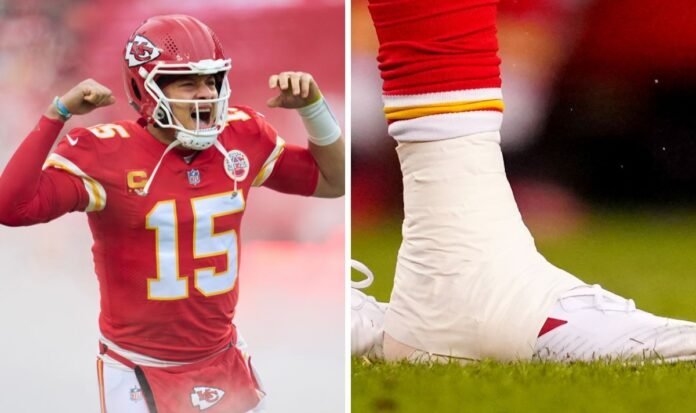

Patrick Mahomes, the star quarterback for the Kansas City Chiefs, suffered a serious injury in December 2025 during an intense game. The injury involved his left knee, specifically the tearing of two crucial ligaments called the ACL (anterior cruciate ligament) and the LCL (lateral collateral ligament). This type of injury is one of the most challenging for athletes, especially those who rely on quick movements and strong legs like football players.
The injury happened suddenly during a play where Mahomes was tackled hard, causing his knee to twist unnaturally. When such ligaments tear, it often results in immediate pain, swelling, and an inability to continue playing. For Mahomes, this injury not only ended his game early but also sidelined him for the rest of the season, leaving fans and the team worried about what’s next.
This injury is more than just a pain issue — it affects the knee’s stability and strength. The ACL and LCL are key to keeping the knee steady when running, cutting, or changing direction. Without these ligaments working properly, the knee can buckle or give way, which can be dangerous during high-impact sports.
Despite this setback, Mahomes has undergone surgery and started his recovery journey. His injury is getting attention worldwide because he is not just any player—he is one of the most talented quarterbacks in NFL history, known for his incredible arm strength and agility. How he recovers will be closely watched by fans, medical experts, and sports analysts alike.
Understanding Patrick Mahomes’ Knee Injury – ACL and LCL Explained
The injury Patrick Mahomes suffered involves two important ligaments in the knee: the ACL (anterior cruciate ligament) and the LCL (lateral collateral ligament). These ligaments play a big role in how the knee moves and stays stable, especially during sports that need quick movements like football.
The ACL is found inside the knee and connects the thigh bone to the shin bone. It helps control the forward movement of the shin and prevents the knee from twisting too much. The LCL, on the other hand, is located on the outside part of the knee. It helps keep the knee steady, especially when the leg moves sideways.
When these ligaments tear, as happened with Mahomes, the knee loses its normal stability. This means the knee can feel loose or give way, making it very hard to walk, run, or change direction without pain or risk of further injury. For a football quarterback like Mahomes, whose game depends on quick steps, strong footing, and sharp moves, this is a serious problem.
Many athletes who tear their ACL and LCL face long recovery times because these ligaments don’t heal on their own. Usually, surgery is needed to repair or reconstruct the ligaments, followed by months of physical therapy. This injury is one of the most common in sports but also one of the toughest to fully recover from.
Knee Ligaments Quick Fact Table
| Ligament | Function | Injury Impact |
|---|---|---|
| ACL (Anterior Cruciate Ligament) | Prevents forward movement and rotation of the shin bone | Tearing causes instability and difficulty in pivoting |
| LCL (Lateral Collateral Ligament) | Stabilizes the outer knee and controls sideways motion | Tear leads to knee wobbling and reduced side stability |
Understanding these ligaments helps explain why Patrick Mahomes’ injury has such a big effect on his ability to play. The knee needs to be very strong and stable for football, and when these key parts are damaged, it takes time, care, and expert treatment to get back to full strength.
Surgery and Treatment for Patrick Mahomes Injury
After his ACL and LCL tear, Patrick Mahomes underwent surgery to repair the damage. This surgery is crucial because torn ligaments like the ACL and LCL cannot heal properly on their own. The operation usually involves reconstructing the torn ligaments using grafts—often taken from the patient’s own body or from a donor—to replace the damaged tissue.
The surgical procedure is delicate and requires a skilled orthopedic surgeon who specializes in sports injuries. In Mahomes’ case, the surgery took place shortly after the injury to prevent further damage and begin the healing process. The goal is to restore the knee’s stability so that the player can eventually return to the field.
Following surgery, the treatment plan shifts to managing pain and swelling and then gradually rebuilding strength. Pain management often includes medication and careful rest. Swelling is controlled with ice, compression, and elevation.
Rehabilitation is the most critical part of recovery after surgery. It typically begins with gentle movement exercises to keep the knee flexible, followed by strengthening workouts to rebuild the muscles around the knee. This rehab helps protect the repaired ligaments and improves overall knee function.
For professional athletes like Mahomes, rehab programs are personalized and intensive, often involving physical therapists who understand the demands of football. The goal is not just to heal but to return Mahomes to the same level of performance he had before the injury.
Recovery Timeline and Rehabilitation Process
Recovering from an ACL and LCL injury like Patrick Mahomes’ takes time, patience, and hard work. For most athletes, the full recovery timeline ranges from 9 to 12 months, but this can vary based on the individual, the severity of the injury, and how well the rehab goes.
The recovery process is usually divided into several stages:
-
Initial Healing (0-6 weeks): The focus is on controlling pain and swelling while starting gentle movements to prevent stiffness.
-
Early Strengthening (6-12 weeks): Light exercises begin to rebuild the muscles around the knee without putting too much stress on the ligaments.
-
Advanced Strengthening and Stability (3-6 months): Rehab becomes more intense with balance, agility, and strength training.
-
Sport-Specific Training (6-9 months): Mahomes will gradually return to football drills, focusing on movements like sprinting, cutting, and throwing.
-
Full Return (9-12 months): If rehab goes well, Mahomes may be cleared to play competitively again.
Recovery Timeline at a Glance
| Phase | Duration | Focus |
|---|---|---|
| Initial Healing | 0-6 weeks | Pain control, swelling reduction, gentle movement |
| Early Strengthening | 6-12 weeks | Muscle rebuilding, limited knee stress |
| Advanced Rehab | 3-6 months | Balance, stability, strength increase |
| Sport-Specific | 6-9 months | Football drills and agility |
| Full Return | 9-12 months | Clearance for competitive play |
Patience is key during this process. Pushing too hard too soon can lead to setbacks. For a player of Mahomes’ caliber, the goal is not just to heal but to regain full confidence and strength in the knee.
Impact of Patrick Mahomes Injury on His Career and the Kansas City Chiefs
Patrick Mahomes’ injury has significant effects both on his career and on the Kansas City Chiefs team. Mahomes is the face of the franchise and one of the league’s best quarterbacks, so his absence shakes up team dynamics.
For the rest of the 2025 season, Mahomes is out of play, which means the Chiefs have to rely on backup quarterbacks. This shift affects the team’s offensive strategies since Mahomes’ style involves quick throws, improvisation, and strong leadership on the field.
There’s also concern about how the injury might affect Mahomes’ long-term career. ACL and LCL injuries are serious, but many athletes have come back successfully. However, recovery varies, and sometimes players don’t return to their previous peak performance right away. The Chiefs and Mahomes will likely take every precaution to ensure a safe and thorough recovery.
The injury also impacts fans and fantasy football players who follow the team closely. Mahomes’ absence creates opportunities for other players but also uncertainty about the team’s chances in upcoming games.
Ultimately, Mahomes’ comeback will be a story to watch in the NFL. His skill, work ethic, and medical care will all play a role in how quickly and fully he returns.
Common Questions About Patrick Mahomes Injury
Can Patrick Mahomes fully recover from an ACL and LCL tear?
Many athletes have successfully returned from similar injuries with full recovery. With modern surgery and rehab, the chances are good, but it takes time and careful work.
How long will it take for Mahomes to return to play?
Typically, recovery takes 9 to 12 months. For Mahomes, it depends on how well his knee heals and how his rehab progresses.
Will this injury affect his playing style?
Mahomes might need some time to regain confidence, but with proper rehab, he can return to his dynamic style.
What risks exist for re-injury?
There is always a risk of re-injury after ligament tears, so rehab and strength training are essential to reduce that risk.
How will the injury affect the Chiefs’ season?
The team will need to adjust their offense and rely on backups, which could affect their performance.
What Fans and Fantasy Football Players Need to Know
For fans, the biggest news is that Patrick Mahomes will be out for the rest of the 2025 season, giving backup quarterbacks a chance to step up. This means the Chiefs’ offense might look different, and fans should prepare for changes in the team’s gameplay.
Fantasy football players should take note: Mahomes’ injury means he won’t score points for the rest of the season, so they will need to find other reliable quarterbacks. This could also impact the value of other Chiefs players.
Keeping updated on Mahomes’ recovery progress will be important for both fans and fantasy players. Official team announcements and injury reports are the best sources for this info.
Supporting Mahomes and the Chiefs during this tough time is also important. Injuries are part of sports, but great players often come back stronger.patrick mahomes injury