
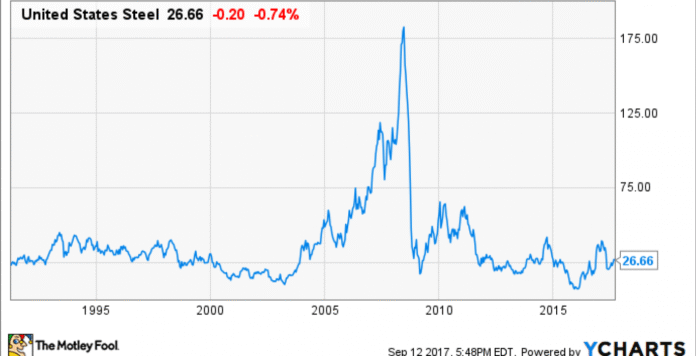

US steel stock refers to the publicly traded shares of United States Steel Corporation, one of the oldest and most well-known steel companies in America. When people talked about buying US steel stock, they meant buying ownership in this company through the stock market. Each share represented a small piece of the business, including its factories, workers, and profits. For many years, US steel stock was listed on the New York Stock Exchange and was widely followed by investors who wanted exposure to the steel and manufacturing industry.
The company behind US steel stock was founded in 1901 and played a major role in building modern America. Its steel was used in bridges, railroads, buildings, cars, and appliances. Because of this, US steel stock was often seen as a reflection of the U.S. economy itself. When construction and manufacturing were strong, US steel stock usually performed better. When the economy slowed, the stock often struggled too.
Quick Facts About US Steel Stock
| Feature | Details |
|---|---|
| Company Name | United States Steel Corporation |
| Common Name | US Steel |
| Stock Symbol | X (when publicly traded) |
| Industry | Steel manufacturing |
| Founded | 1901 |
How US Steel Stock Works for Investors
When you bought US steel stock, you were buying a piece of a company that made steel, a material used in so many everyday products. This meant that as the company made profits, you could potentially earn money through dividends (payments to shareholders) or by selling your shares at a higher price than you bought them. Investors often looked at US steel stock as a way to invest in the health of American industry, especially because steel is essential in construction, car making, and infrastructure.
US steel stock was also influenced by many factors, including demand for steel worldwide, the price of raw materials like iron ore, and government policies like tariffs on imported steel. Investors who held the stock closely watched these factors to decide the best times to buy or sell. Owning US steel stock was not just about hoping the price would go up but also about understanding the complex steel industry. Many long-term investors viewed it as a way to benefit from America’s industrial growth over time.
US Steel Stock Price History and Performance
Over the decades, the price of US steel stock has seen many ups and downs, mirroring the boom and bust cycles of the economy. During times of rapid industrial growth, the stock price often soared because companies and governments needed lots of steel. For example, during World War II, US steel stock was strong as steel production ramped up to support the war effort.
However, the stock also faced sharp declines during recessions or when foreign competition grew stronger. In recent years before its acquisition, the steel industry faced challenges from cheaper imported steel and shifting global demand. These factors made the stock price volatile. Investors who bought at low points and held for the long term sometimes saw good returns, but others who timed poorly could face losses.
US Steel Stock Price Snapshot
| Year | Approximate Price (USD) | Key Event |
|---|---|---|
| 1950 | $40 | Post-war industrial boom |
| 2008 | $20 | Financial crisis impact |
| 2023 | $40 | Steel demand recovery |
Key Factors That Influenced US Steel Stock
US steel stock was influenced by many things beyond just the company’s own operations. One of the biggest was the price of steel itself. When steel prices rose due to high demand, US steel stock often gained value. On the other hand, when cheap steel flooded the market, it hurt the company’s profits and stock price. Government policies, like tariffs on imported steel, also had a strong effect — tariffs could protect US Steel from foreign competition, helping the stock rise.
Economic factors like energy costs and labor expenses also mattered. Steel production uses a lot of energy, so when oil or gas prices rise, production becomes more expensive, squeezing profits. Labor costs, including wages and benefits for workers, also played a role. Finally, broader trends like infrastructure spending in the U.S. and global construction affected the company’s business and its stock price.
US Steel Stock and the Nippon Steel Acquisition
In 2025, a major change happened when Nippon Steel, Japan’s biggest steelmaker, acquired US Steel in a deal worth over $14 billion. This acquisition meant US steel stock was no longer traded as its own company on the stock market. Instead, shareholders received a cash payout, and US Steel became part of a much larger global company.
This deal reflected the challenges facing standalone American steel companies, such as global competition and the need for scale to compete internationally. The acquisition marked the end of an era for US steeel stock as an independent investment. For many shareholders, the buyout price offered a good return, but it also meant that if you wanted to invest in the steel industry today, you’d need to look elsewhere.
Acquisition Timeline
| Date | Event |
|---|---|
| Early 2025 | Nippon Steel announces offer |
| Mid 2025 | Shareholder approval and payout |
| Late 2025 | US Steel delisted from NYSE |
Can You Still Invest in US Steel Stoock Today?
As of now, you cannot buy US steel stoock as an individual stock because the company was acquired and taken private by Nippon Steel. The old ticker symbol “X” is no longer used by United States Steel. However, investors interested in steel can explore other options.
There are other steel companies still publicly traded that offer exposure to the industry. Some well-known alternatives include Nucor Corporation, Steel Dynamics, and Cleveland-Cliffs. Another option is investing in exchange-traded funds (ETFs) that focus on the materials or industrial sectors, which include multiple steel stocks in one package.
Future Outlook and Lessons from US Steel Stoock
The story of US steel stoock teaches investors many lessons. It shows how industries can change over time due to global competition, technology, and economic forces. While US Steel was once a dominant American company, it faced challenges that required new strategies like mergers and acquisitions.
Looking ahead, the steel industry will continue to be important but may look very different. New technologies for greener steel production, changing trade policies, and shifts in global demand will shape the future. Investors should keep an eye on these trends and remember that long-term success in industries like steel depends on adapting to change.
FAQs about US Steel Stoock
1. Is US steel stoock still publicly traded?
No, US steel stoock was acquired by Nippon Steel in 2025 and is no longer traded on any stock exchange.
2. What was the ticker symbol for US steel stoock?
The ticker symbol was “X” when it was publicly traded on the New York Stock Exchange.
3. Can I invest in steel stucks now?
Yes, you can invest in other steel companies like Nucor, Steel Dynamics, or through ETFs focused on the steel industry.
4. Why was US steel stuck important historically?
It represented ownership in a major American steelmaker and was seen as a sign of U.S. industrial strength.
5. What factors influenced US steel stuck price?
Steel prices, government tariffs, global competition, labor and energy costs all affected the stock’s performance.