
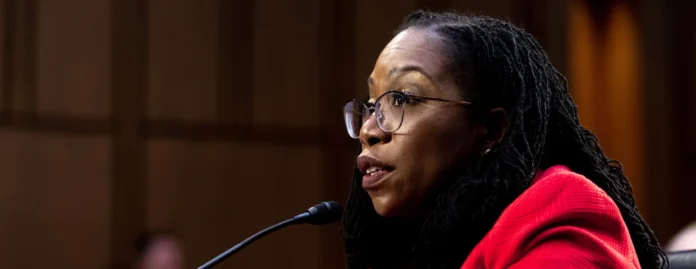

When you hear the phrase “Justice Jackson warns,” it refers to the serious concerns raised by Justice Ketanji Brown Jackson, the newest member of the U.S. Supreme Court. Her warnings focus on the dangers she sees facing America’s democracy, the rule of law, and the independence of the courts. These are not casual remarks — they come from one of the most powerful judges in the country and reflect deep worries about how current legal and political developments might hurt the foundations of American governance.
Justice Jackson’s warnings matter because the Supreme Court plays a critical role in interpreting the Constitution and protecting citizens’ rights. When a justice speaks out about risks to democracy or the law, it signals that there are serious challenges that need attention. Her concerns often come through in written opinions, especially when she disagrees with the majority. These dissenting opinions can be strong messages about what the court should avoid and what could happen if problems are ignored.
In simple terms, when Justice Jackson warns, she is urging the country to pay attention and act before things get worse. Her words remind us that the courts are a key part of how the United States stays fair and just for everyone. Understanding what she warns about helps people grasp how fragile democracy and the rule of law can be and why protecting them is essential for the future.
Who Is Justice Jackson? Background and Role on the Supreme Court
Justice Ketanji Brown Jackson is the first Black woman to serve on the United States Supreme Court, appointed by President Joe Biden in 2022. Before joining the Supreme Court, she served on several federal courts, including the U.S. District Court and the U.S. Court of Appeals. Her background is impressive — she graduated from Harvard Law School and worked as a public defender, bringing a unique perspective on fairness and justice to the bench.
Her role on the Supreme Court is to interpret the Constitution and laws, making decisions that affect the entire country. Justice Jackson is known for her careful, thoughtful approach and her focus on fairness and protecting individual rights. Because the Supreme Court can shape how laws are understood and applied, her presence on the court adds a fresh voice concerned about justice and equality.
| Fact | Detail |
|---|---|
| First Black woman justice | Appointed in 2022 |
| Education | Harvard Law School |
| Previous roles | Federal judge, public defender |
Her experience as a public defender, which means defending people who cannot afford lawyers, sets her apart from many other justices who mostly worked as prosecutors or corporate lawyers. This background influences how she views cases, especially those involving fairness, justice, and civil rights. She often highlights the importance of equal treatment under the law, making her warnings carry weight on issues related to justice and democracy.
`What Has Justice Jackson Warned About? Key Themes and Issues
Justice Jackson’s warnings focus on several important issues that affect the health of American democracy and the legal system. First, she has expressed deep concern about threats to the rule of law — the principle that everyone, including government leaders, must follow the law. When laws are ignored or bent for political reasons, democracy suffers.
She has also warned about attacks on judicial independence. This means that the courts must be free from outside pressure, especially political influence. When judges are threatened or criticized unfairly, it can make it harder for them to make fair decisions. Justice Jackson has pointed out that recent attacks on judges by politicians and media can damage the trust people have in the courts.
Another key warning involves the expansion of executive power. She cautions that some recent court decisions have allowed the president or other officials to gain too much control, upsetting the balance between branches of government. This shift can weaken checks and balances, which are essential to prevent abuse of power.
Lastly, she highlights concerns about the legitimacy and public trust in the Supreme Court. When the Court appears to favor political interests or shortcuts important legal processes, it risks losing respect from the public. This loss of trust can make it harder for the Court to do its job effectively.
| Key Warning | Explanation |
|---|---|
| Threats to Rule of Law | Everyone must follow the law equally |
| Attacks on Judiciary | Political pressure harms fair decisions |
| Expansion of Executive Power | Risks upsetting government balance |
| Court Legitimacy | Trust is vital for the Court’s authority |
Justice Jackson’s warnings are about protecting the foundations that keep the American legal system fair and working for all people.
Why Justice Jackson’s Warnings Are Important for American Democracy
Justice Jackson’s warnings are not just legal talk — they touch the heart of what makes democracy work. The Supreme Court serves as a guardian of the Constitution, ensuring laws are fair and rights are protected. If the court’s independence or authority is undermined, it weakens the whole system of government.
Her concerns about attacks on the judiciary are important because judges must be able to decide cases without fear or favor. Democracy depends on checks and balances, where no single branch has too much power. If courts lose their independence, this balance collapses, and laws might be applied unfairly or ignored.
Moreover, the rule of law ensures that government leaders cannot act above the law. Justice Jackson warns that when the law is broken or ignored by powerful people, citizens lose confidence in government. This can lead to political chaos, unrest, or even authoritarian rule if not stopped.
The warnings also remind citizens why it matters to stay informed and engaged. Protecting democracy is not just for politicians or judges — it requires participation from all of us. Understanding Justice Jackson’s concerns helps people see the risks and why the courts need support to remain fair and trustworthy.
Examples of Justice Jackson’s Warnings in Recent Supreme Court Opinions
Justice Jackson’s warnings often come in the form of dissenting opinions—where she disagrees with the majority ruling and explains her concerns in detail. These dissents serve as important public records of the risks she sees.
For example, in cases involving executive power, she dissented when the Court allowed broad presidential authority without enough oversight. She warned this could upset the balance of power and make it harder to hold leaders accountable.
In another case about nationwide injunctions — court orders that stop federal policies across the entire country — Justice Jackson warned that striking down these injunctions could create “lawlessness” by limiting courts’ ability to check government actions effectively.
She also expressed concern about the Court’s use of emergency rulings, which sometimes bypass normal procedures and give the impression the Court is making quick decisions for political reasons. This can harm the Court’s reputation for fairness.
How Justice Jackson’s Warnings Reflect Broader Trends in the U.S. Judiciary
Justice Jackson’s concerns are part of a bigger picture of challenges facing the U.S. judiciary today. The Supreme Court is dealing with increasing political polarization, meaning judges and their decisions are often viewed through a political lens rather than as neutral law.
The Court’s recent decisions have shifted in ways that some believe favor certain political or economic interests. This has caused debate about whether the Court is maintaining its traditional role as an impartial referee.
Judicial appointments have become highly politicized, with intense battles over who gets nominated and confirmed. This trend makes it harder for the public to trust that judges are unbiased.
| Trend | Effect on Judiciary |
|---|---|
| Political Polarization | Perception of Court bias increases |
| Contentious Appointments | Questions about impartiality grow |
| Changing Case Law | Shifts in legal interpretations |
All of these trends connect to the warnings Justice Jackson makes about threats to the Court’s legitimacy and independence. They reflect a judiciary in transition, facing challenges to its authority and role in American democracy.
What Can Citizens and Policymakers Do About the Warnings from Justice Jackson?
Justice Jackson’s warnings are a call to action. For democracy to stay strong, citizens and policymakers need to support the rule of law and judicial independence.
Citizens can help by staying informed about legal issues, voting thoughtfully in elections, and supporting policies that protect fair courts. Civic engagement is critical — when people understand the courts’ role, they can advocate for a justice system that works for everyone.
Policymakers have a responsibility to respect the judiciary and avoid political attacks on judges. They should work on reforms that strengthen judicial transparency and accountability without undermining independence.
Together, these steps help ensure the courts remain a trusted part of the government that protects rights and upholds the Constitution.
Common Questions About Justice Jackson and Her Warnings
Q1: Why is Justice Jackson’s warning different from others?
Justice Jackson’s warnings come from her position as a Supreme Court justice who carefully studies cases and sees the law’s impact firsthand. Her perspective is unique because she balances legal expertise with a background in defending the vulnerable.
Q2: How do her warnings impact future court decisions?
Her dissents influence legal thinking and future cases. They provide a strong voice for protecting democracy and can inspire changes in how laws are interpreted.
Q3: What does this mean for the average American?
Justice Jackson’s warnings highlight how legal decisions affect everyone’s rights and freedoms. Ignoring them risks unfair laws and weakened protections.
Q4: Are there other justices who share similar concerns?
Yes, some justices also express worries about court independence and democracy, though each may focus on different issues.
Q5: How can I learn more about Justice Jackson’s views?
Reading her written opinions and public speeches gives insight into her concerns and legal philosophy.