
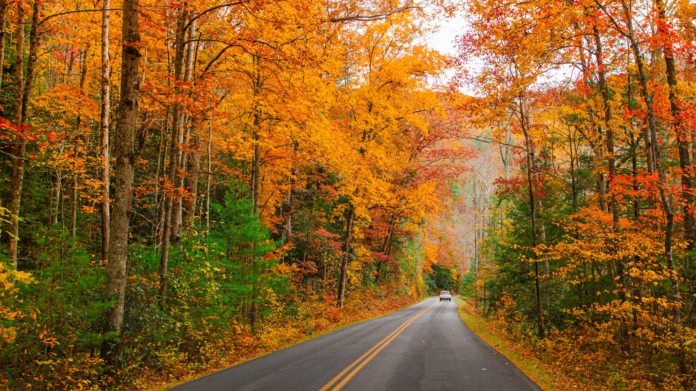

The first day of fall 2025 officially falls on Monday, September 22, 2025, in the Northern Hemisphere. This date is set by astronomy, not by the calendar alone. Fall begins at the exact moment of the autumnal equinox, when the sun crosses Earth’s equator. On this day, daytime and nighttime are almost the same length, creating a natural balance before days slowly become shorter.
Many people are surprised to learn that the first day of fall does not always land on the same date each year. It can shift between September 22 and September 23, depending on Earth’s orbit and leap years. This is why checking the exact date of the first day of fall 2025 matters, especially for planning seasonal events, school calendars, or travel.
The first day of fall 2025 does not begin at midnight. Instead, it starts at a precise time when the equinox occurs. From that moment on, the Northern Hemisphere officially moves from summer into fall, even if warm weather continues in some regions.
Quick Facts: First Day of Fall 2025
| Detail | Information |
|---|---|
| Season | Fall (Autumn) |
| Date | September 22, 2025 |
| Event | Autumnal Equinox |
| Day & Night | Nearly equal length |
| Hemisphere | Northern Hemisphere |
Although fall may feel like it starts when temperatures drop or leaves change color, the first day of fall 2025 is defined by the sun’s position, not the weather. This makes it a global and scientific moment that affects daylight patterns across the entire planet.
What Is the First Day of Fall?
The first day of fall is the official start of the autumn season based on astronomy. It happens during the autumnal equinox, when the sun is positioned directly above the Earth’s equator. On this day, daylight and darkness are almost equal in length. This balance is why the equinox is often linked to ideas of change, transition, and harmony in nature.
For many people, the first day of fall feels symbolic. It marks a shift away from long summer days toward cooler weather and shorter daylight hours. Even though temperatures may not drop right away, the first day of fall 2025 signals that seasonal changes have begun. Trees, animals, and even human routines slowly start adjusting after this point.
First Day of Fall 2025 vs Meteorological Fall
The first day of fall 2025 is different from what meteorologists call fall. Astronomical fall begins with the equinox in September, while meteorological fall always starts on September 1. Meteorologists use this system because it helps them track weather patterns and compare data more easily from year to year.
This difference often causes confusion. People may hear that fall starts on September 1, but the true seasonal shift happens later. When talking about the first day of fall 2025, most calendars, schools, and cultural traditions follow the astronomical definition. That makes September 22 the date most people recognize as the real beginning of fall.
What Happens on the First Day of Fall 2025?
On the first day of fall 2025, the most noticeable change is in daylight. After this day, nights become longer than days in the Northern Hemisphere. The sun rises later each morning and sets earlier each evening. These changes may feel small at first, but they become more noticeable as the weeks pass.
Nature also begins to respond. Plants prepare for colder months, animals adjust their behavior, and weather patterns slowly shift. While it may still feel warm in many places, the first day of fall starts a chain reaction that leads to cooler air, falling leaves, and the familiar signs of autumn people love.
Seasonal Changes After the First Day of Fall 2025
| Change Area | What Happens |
|---|---|
| Daylight | Days slowly get shorter |
| Weather | Cooler nights begin |
| Nature | Leaves start changing |
| Sun Position | Moves lower in the sky |
First Day of Fall 2025 in the Northern vs Southern Hemisphere
In the Northern Hemisphere, the first day of fall 2025 marks the move from summer to autumn. Countries like the United States, Canada, and much of Europe experience shorter days and cooler temperatures after this point. This is the fall season most people refer to when discussing autumn.
At the same time, the Southern Hemisphere experiences the opposite. For places like Australia and South America, September 22, 2025, marks the first day of spring. This happens because Earth is tilted, causing each hemisphere to receive sunlight differently throughout the year. One equinox creates two very different seasonal experiences.
Traditions and Meaning of the First Day of Fall
The first day of fall has been meaningful for centuries. Ancient farming societies viewed it as a harvest signal, a time to gather crops and prepare for winter. Many cultures celebrated balance, gratitude, and the cycle of life during this seasonal shift.
Even today, fall is often connected to reflection and change. People associate the first day of fall 2025 with new routines, cozy traditions, and a slower pace of life. From seasonal foods to home décor, autumn brings emotional comfort and a sense of renewal that goes beyond science.
Frequently Asked Questions About the First Day of Fall 2025
1. Is September 22 always the first day of fall?
No. It can fall on September 22 or 23 depending on the year.
2. Does fall start at midnight?
No. Fall begins at the exact moment of the equinox.
3. Why does the first day of fall change dates?
Earth’s orbit and leap years affect the calendar.
4. Is the weather cooler on the first day of fall 2025?
Not always. Weather changes gradually after the equinox.
5. Why is the first day of fall important?
It marks a natural seasonal shift that affects daylight and nature.